
Rajasthan and Gujarat
Block printing
Carvers, printers, dyers and washers, each doing one part of the same cloth.

The exact origins of Indian block printing remain shrouded in mystery, but historical evidence points to pieces of fabric discovered during nineteenth-century excavations in Fostat, Cairo, as the earliest examples of Indian printed cloth. The art was traditionally practised by a closely knit village community: chhippas, the printers; rangrez, the dyers; and dhobis, the washers, working together to create intricately printed fabrics. This knowledge was passed down through generations, reaching back at least three centuries.
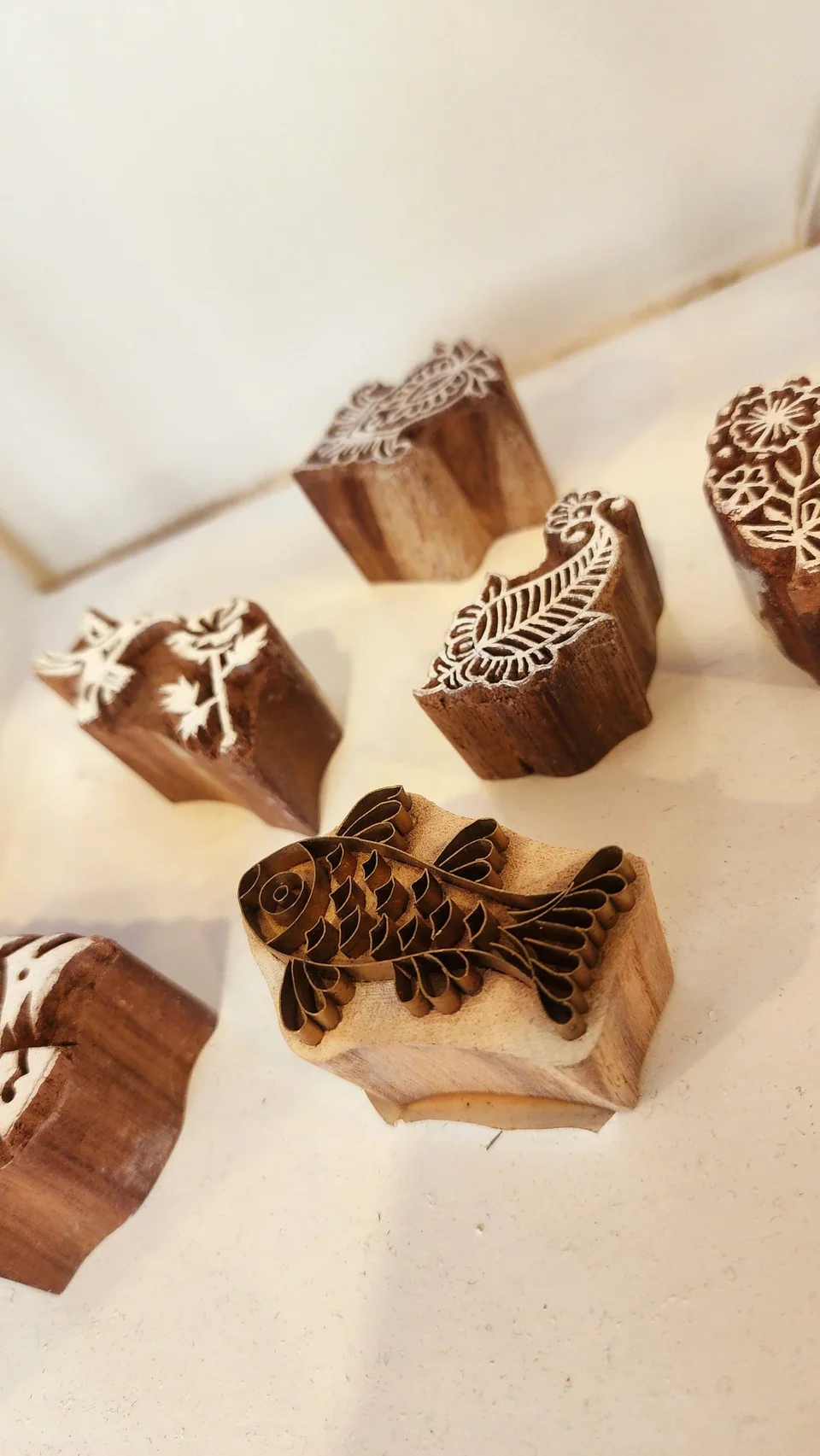
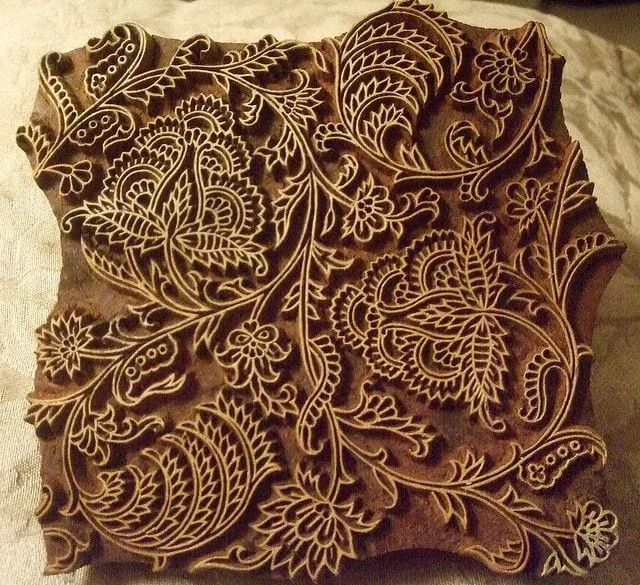
Within tiny open studios, hereditary carvers chisel intricate designs onto teak blocks. Chhippas and rangrez stand before long tables, dipping blocks into vibrant colours and imprinting the fabric one pass at a time. The printed fabrics find their way to indigo vats, and from there to fields where fabrics in indigo, madder, saffron and hot pink dry in the sun.
Despite its magnificence, the industry has faced the threat of extinction for two centuries, a consequence of technological change and the migration of skilled artisans to urban centres.
Down the line
It starts with the carvers, mostly fathers and sons. They squat in small open-fronted studios and chisel the design into teak. Everything printed later comes out of what they cut.
The chhippas and rangrez work standing, at tables long enough to take a full length of fabric. Dip the block into colour, set it down, lift it, move along, set it down again.
For the resist there is a mud made of clay, lime and fermented wheat, sifted through muslin until it is smooth enough to print with. Wherever it lands, the dye cannot reach the cloth underneath.
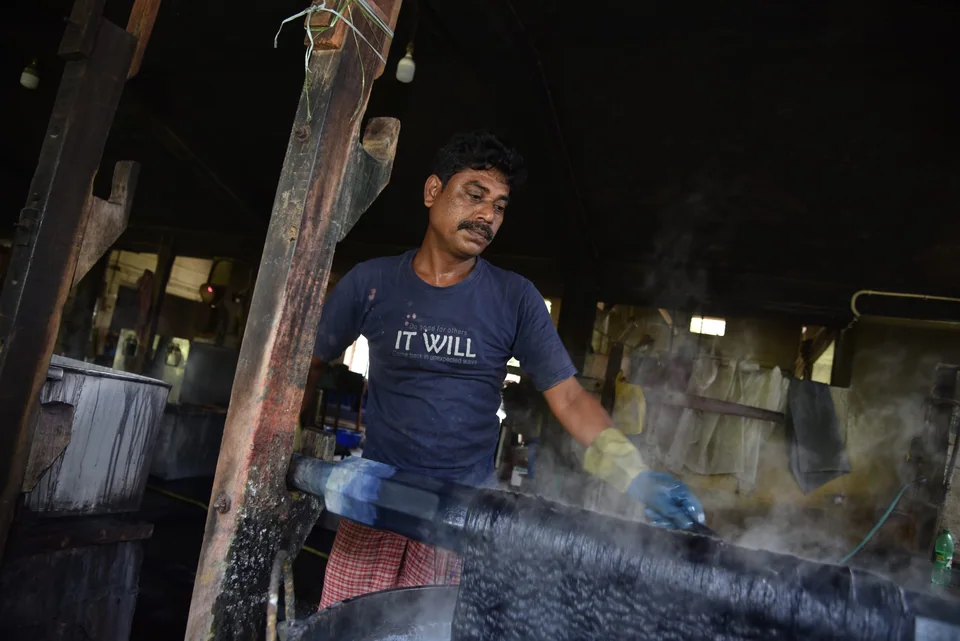
The printed lengths then go into indigo vats, which are looked after by another community of artisans. Washing is the dhobis' work; they stand waist-deep in the water baths. Then the drying, laid out flat across a field or hung from the rooftops all round it.
Under pressure
Block printing has been in trouble for two hundred years, and some of that trouble came from doing well. Hand block prints sold, so mills were built to imitate them, and the imitations were cheaper and faster.
The other pressure is plainer. There is money in the cities, and a young person from a printing family can go and earn it without spending years learning to hold a block level. The knowledge is only ever one generation from stopping, because it lives in hands and nowhere else.
A village that still prints is keeping four or five trades going at once. Lose the carvers and the printers have nothing to print with.
In the making

Wearing it
What we have made with Block printing.
In the studio now


From the archive