Kutch, Gujarat
Ajrakh
Blocks carved so exactly that a few millimetres off ruins the cloth.

In 2001, a devastating earthquake struck the Kutch region, leaving villages in ruins. Despite the tragedy, the craftspeople displayed remarkable resilience, coming together to rebuild their lives in the newly established town of Ajrakhpura.
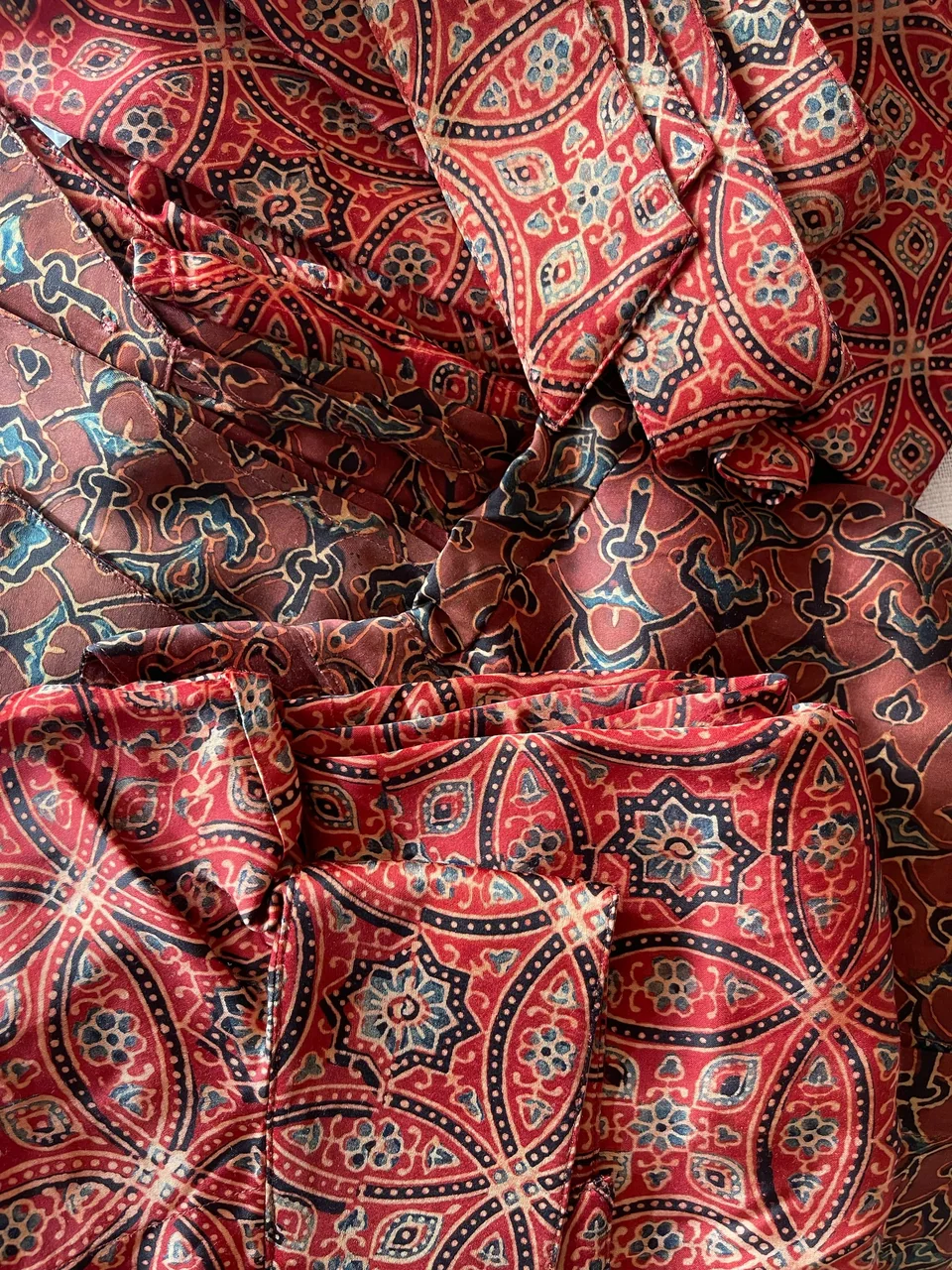
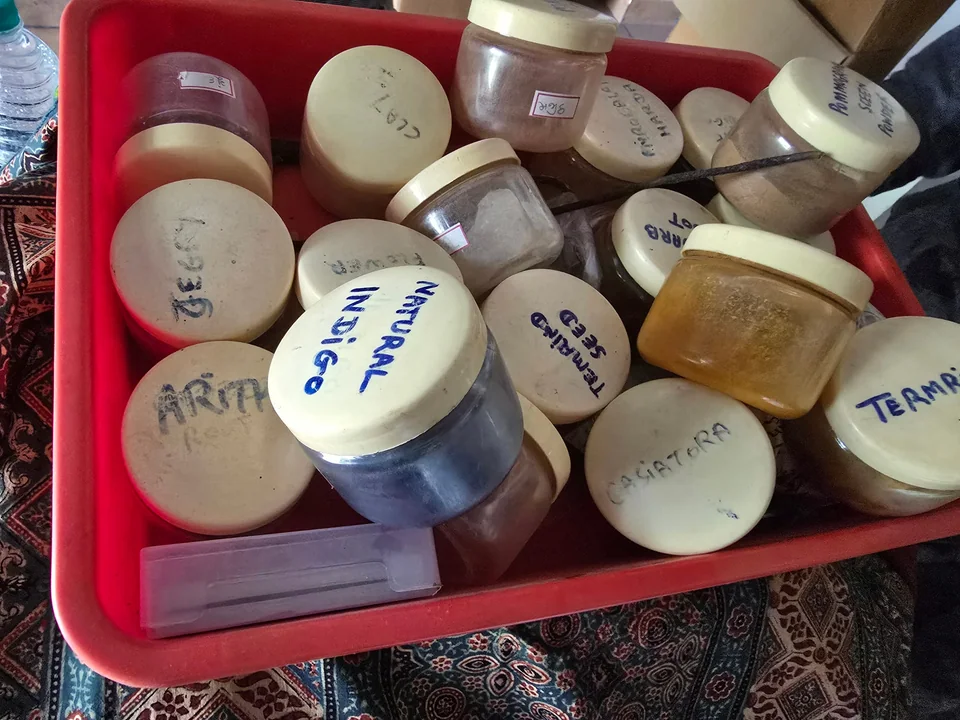
Creating the intricate Ajrakh pattern demands extraordinary precision. Authentic Ajrakh blocks are perfectly square and align seamlessly on all four sides; even a slight error of a few millimetres can cause the print to fail. The textiles are treated with natural vegetable and mineral colours and undergo an extensive washing cycle, typically around eight times, producing the brilliant and enduring hues of the final product.
Despite its worldwide acclaim, the production of Ajrakh fabric remains limited to a few specific regions: Kutch in Gujarat, Barmer in Rajasthan, and Sindh in Pakistan.
The block
The block is where the difficulty sits. Only the most adept carvers make them. They work with compasses and rulers, because the pattern has to be set out by measurement before a chisel touches the wood.
The printer sets the block down by hand, over and over, up the length of the cloth. Each impression has to land against the last one. The block is exact and the placing is human, and the two have to meet several hundred times without slipping.
You can check a piece of Ajrakh yourself without knowing anything about how it was made. Find the join where two impressions meet, and follow a line across it. If the line carries straight through and the star closes, the carver measured right and the printer placed right.
Colour and water
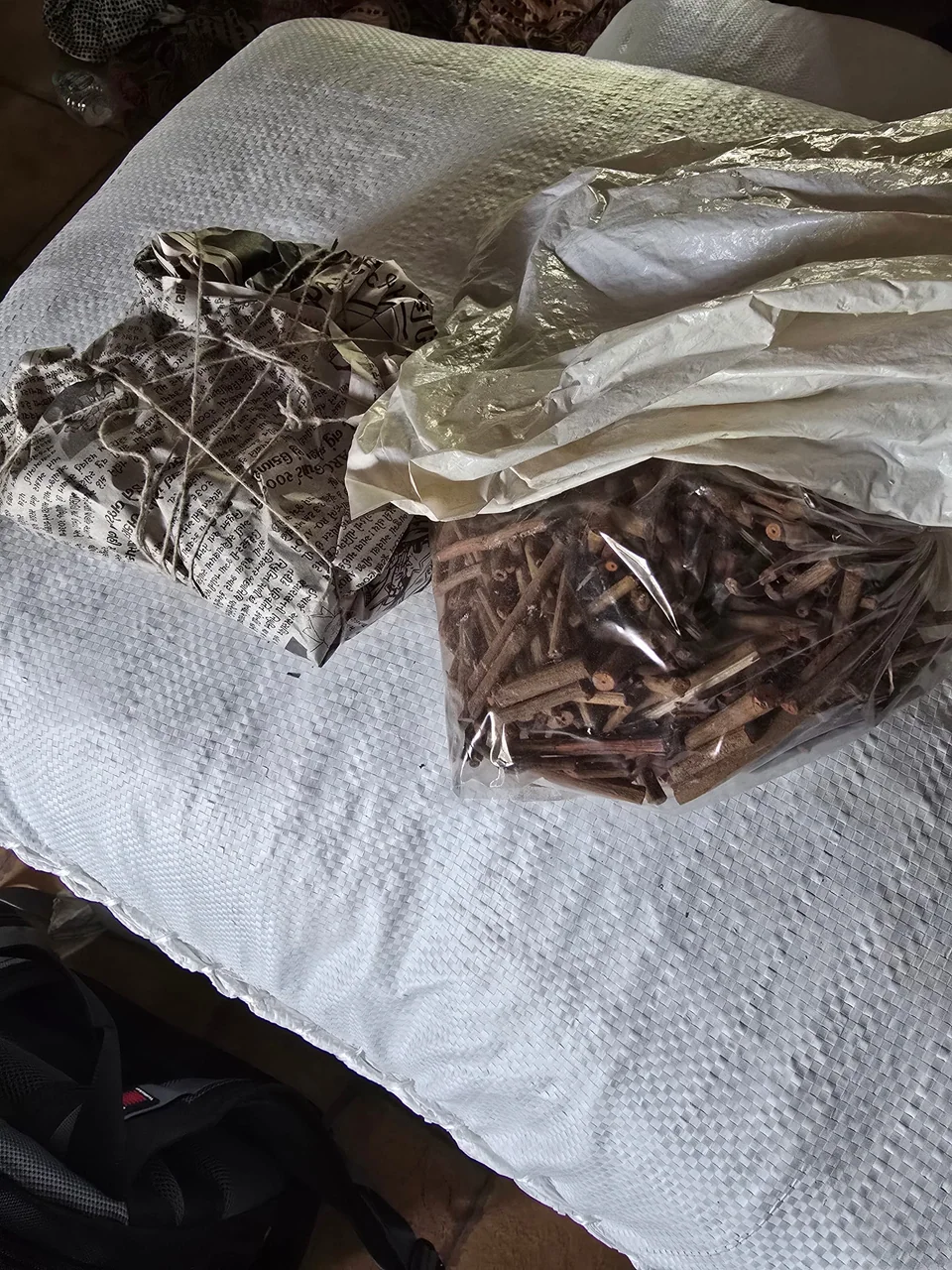
The colours are vegetable and mineral, taken from plants and from the earth. They go on in stages, and between the stages the cloth is washed. Every one of those washes means the whole length lifted, worked through water, wrung out, dried, and carried back to the printing table.
On a map the three places that still make Ajrakh sit close together, on either side of a border. The craft never travelled far from where it began, which is part of why a single earthquake could put so much of it at risk at once.
In the making