Journal · 3 min
Texture is shorthand for authentic
Why we start with how a cloth feels, and only then decide what it becomes.

A creeper trailing along a rough gravelly wall. That was the starting point, and it is worth saying why.
Two surfaces meeting: something soft and moving, something hard and pitted. Your eye reads the difference before your brain catches up. You already know, without touching either, how both would feel under a hand.
That is what texture does. It is a promise the surface makes about itself.
Where design starts here
Most clothing decisions get made in the wrong order. Shape first, then colour, then whatever fabric can be sourced to hit the price.
We work the other way round. The cloth arrives first, usually from a weaver, sometimes from a length that has sat in a market somewhere for a year. It has a hand to it: the way it falls, the way it resists, whether it wants to hold a fold or refuses to.
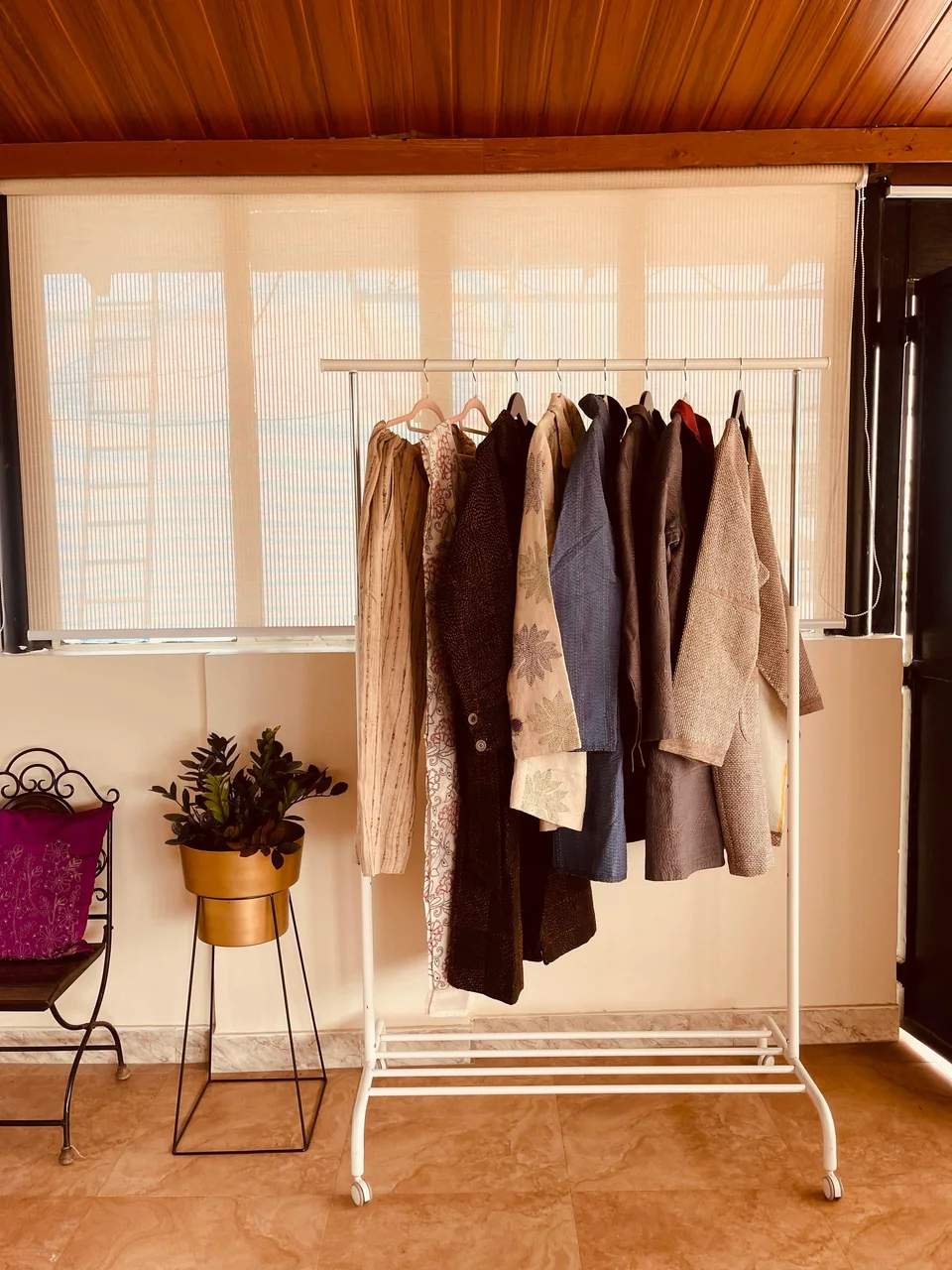
Then the question is what this particular cloth wants to become. A slubby tussar that stands away from the body wants structure, so it becomes a waistcoat. A cotton washed thin enough to see light through wants to move, so it becomes something wide.
What the hand knows
A grape against your tongue. Silk moving across skin. Wool that scratches slightly for the first winter and then stops. They are all sensations, and they all decide how the wearer feels about the day they are having.
Handmade cloth carries more of this than machine cloth, and the reason is arithmetic. A machine holds even tension. A person does not, quite, and those tiny variations across a metre of weaving are what your fingers register as depth.
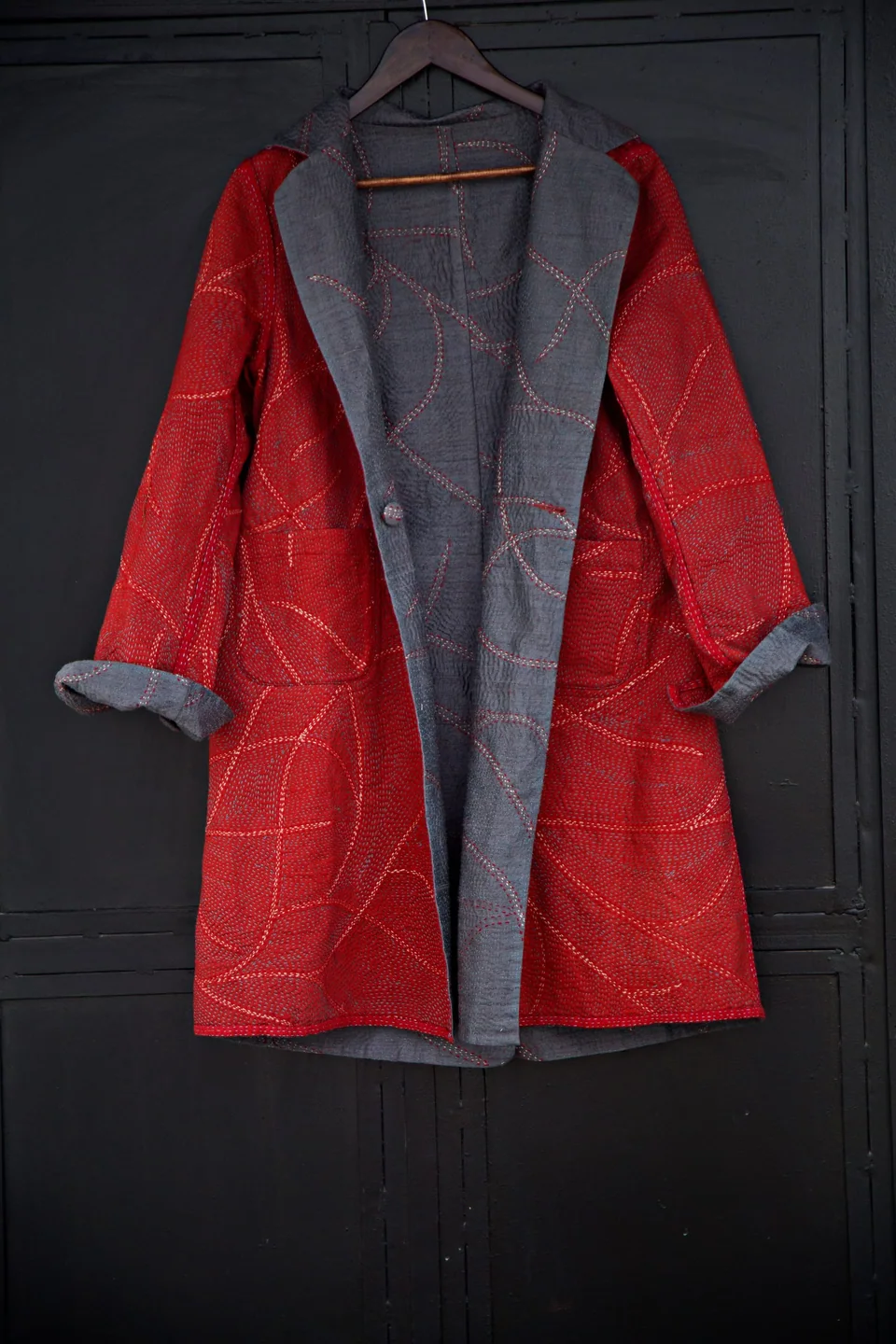
A finished kantha will not lie flat. All those rows of running stitch pull the layers and the surface settles into a shallow ripple. That ripple is the record of somebody sitting with it for weeks.
Why we say authentic
The word gets used badly. Here it means something narrow.
We mean: you can feel that a person was involved. The evidence is in the surface. A drift in a block print repeat where a hand placed the block. A slub in tussar where the silk was what it was. A stitch line that wanders because eyes get tired.
Machines are very good at removing all of that. The removing is the whole point of them.
Our clothes keep it in. Texture, in our vocabulary, is shorthand for authentic. It is also the most honest thing about a garment, because it was there before the label.