Journal · 5 min
Chikankari 101: a guide to Lucknow’s heritage embroidery
White thread on white cloth, thirty stitches, and the fifteen years it takes to master five of them.

At Sensclo, we believe every garment tells a story: one stitched with patience, heritage, and the quiet brilliance of Indian artisans. Chikankari is at the heart of that story. It's a living legacy we're proud to carry forward through slow, sustainable fashion.
What is Chikankari?
Chikankari is a traditional and intricate form of white-thread embroidery originating from Lucknow, India. The name comes from the Persian word "Chikeen" or "Chikan," meaning delicate embroidery or "fabric with white thread." Traditionally worked on fine cotton or muslin, it uses white thread on white cloth to create shadow, outline, and texture. Over time, artisans have begun incorporating coloured and silk threads, but the soul remains the same: understated elegance that feels as light as air against the skin. At Sensclo, we honour this heritage while giving it a contemporary twist, pairing the timeless stitches with modern silhouettes that move with you, season after season.
A brief history: from royal patronage to global appreciation
Chikankari first appeared as a documented craft in the nineteenth century, with early centres in Calcutta, Dacca, Peshawar, and Madras. But it was in Lucknow, under the patronage of Nawab Nazir Ud Din Haidar, that the art truly flourished. Skilled artisans refined the technique, turning it into the refined, heirloom-quality embroidery we know today.
Passed down through generations, Chikankari takes years to learn. An artisan typically masters only four to five out of thirty possible stitches and needs at least fifteen years of dedicated practice before reaching mastery. A single garment can take ten to fifteen days of meticulous handwork. That's the kind of devotion we celebrate at Sensclo, the kind that turns fabric into wearable art.
The craftsmanship: stitches that tell a story
Chikankari is broadly divided into three stitch families:
- Flat stitches: delicate outlines and shadows
- Raised or embossed stitches: adding beautiful texture
- Jaali (openwork) stitches: creating airy, lattice-like patterns that let light dance through the fabric
Every piece is entirely hand-embroidered: needle, thread, and decades of inherited skill. The result? Garments that feel impossibly light, breathe beautifully, and carry the subtle imperfections that prove they were made by human hands.
Sensclo's Chikankari collection
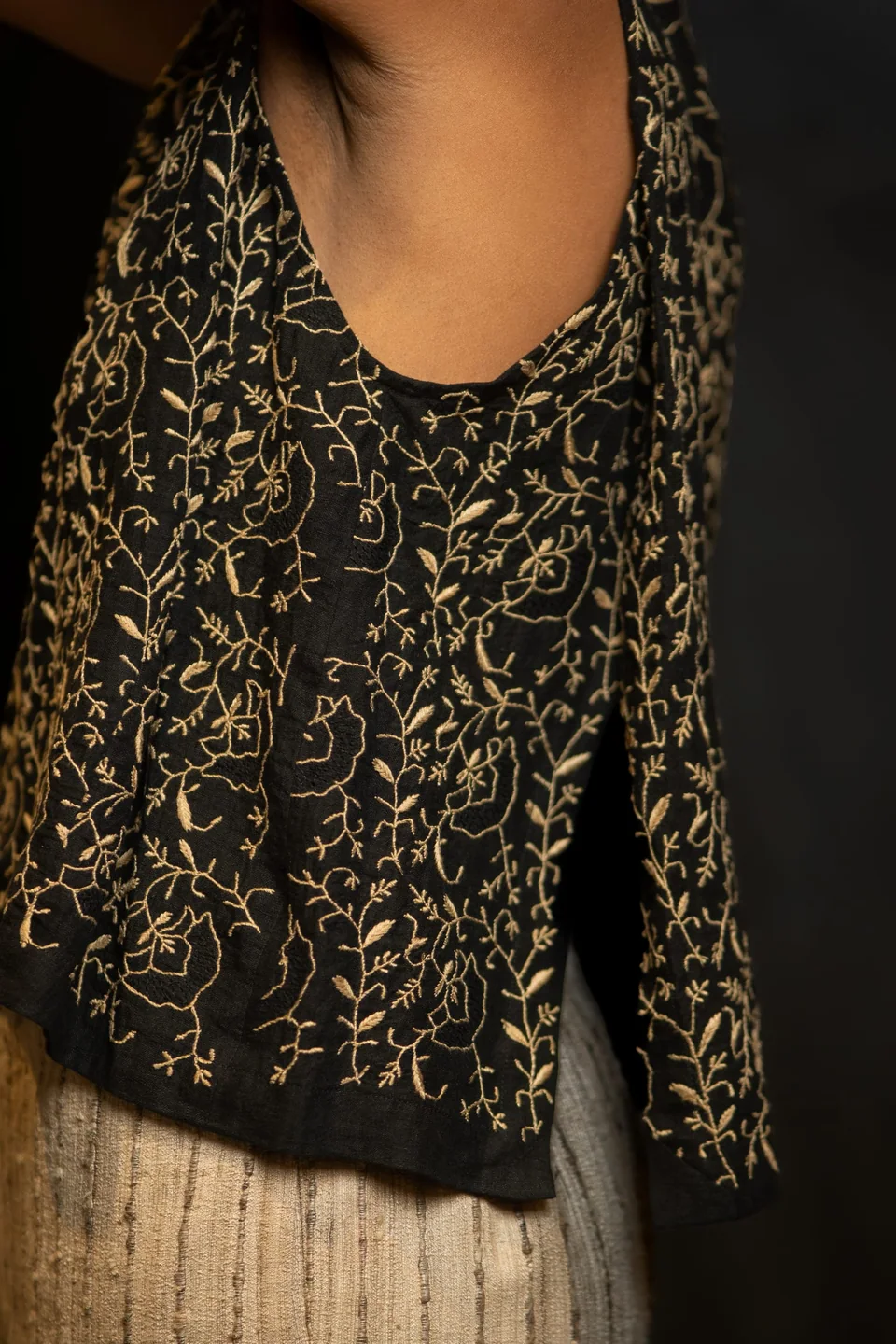
Our linen chikankari top represents the artisanal craftsmanship we often speak of; over 115 hours of dedicated hand-work bring it to life. Crafted from 100% pure linen, it offers softness, breathability, and a drape that feels weightless against the skin, ideal for warm days or layered elegance.
Whether worn as a statement piece for special occasions or for the 'everyday', this piece is an heirloom celebrating patience, heritage, and understated opulence.
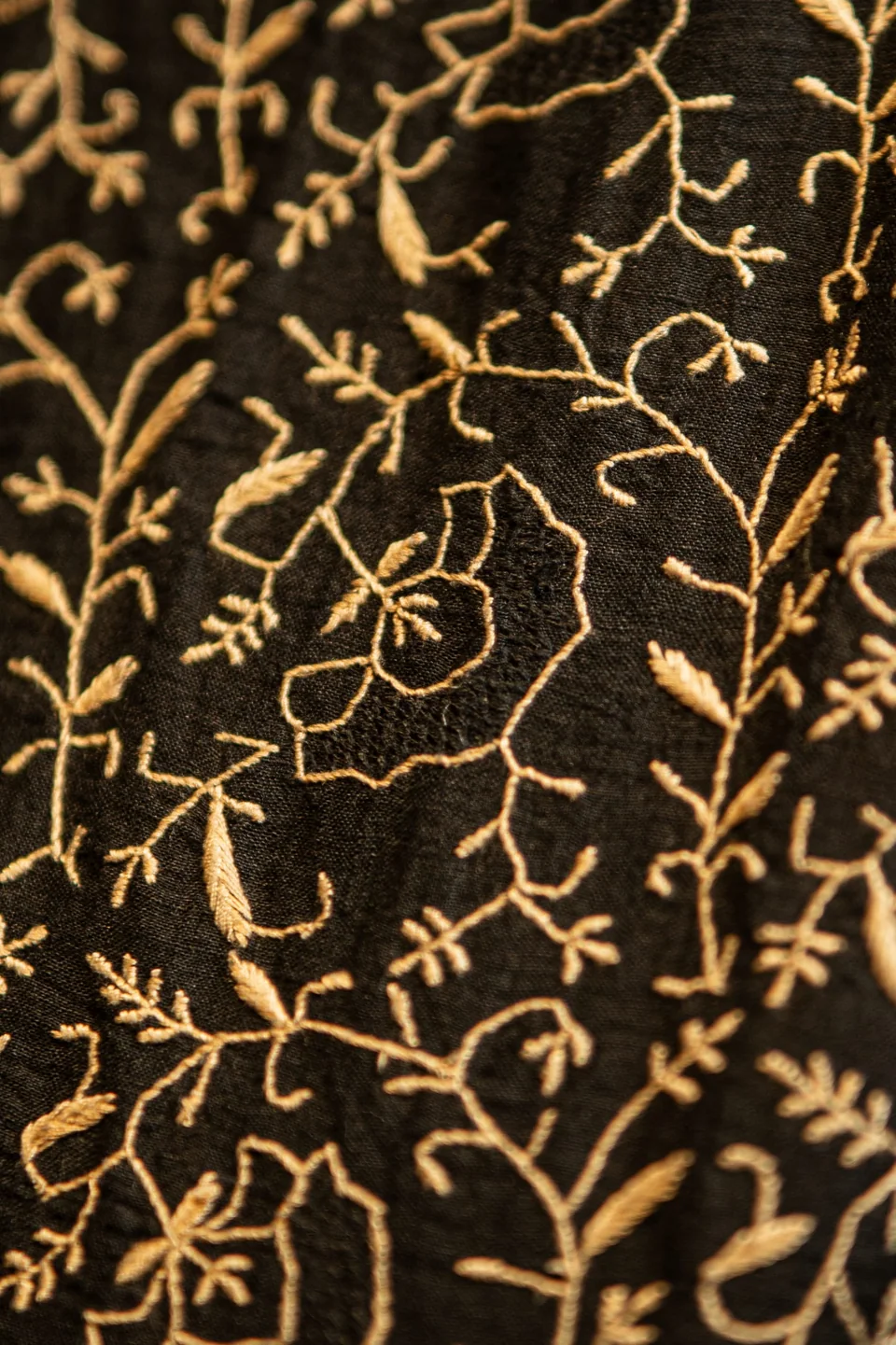
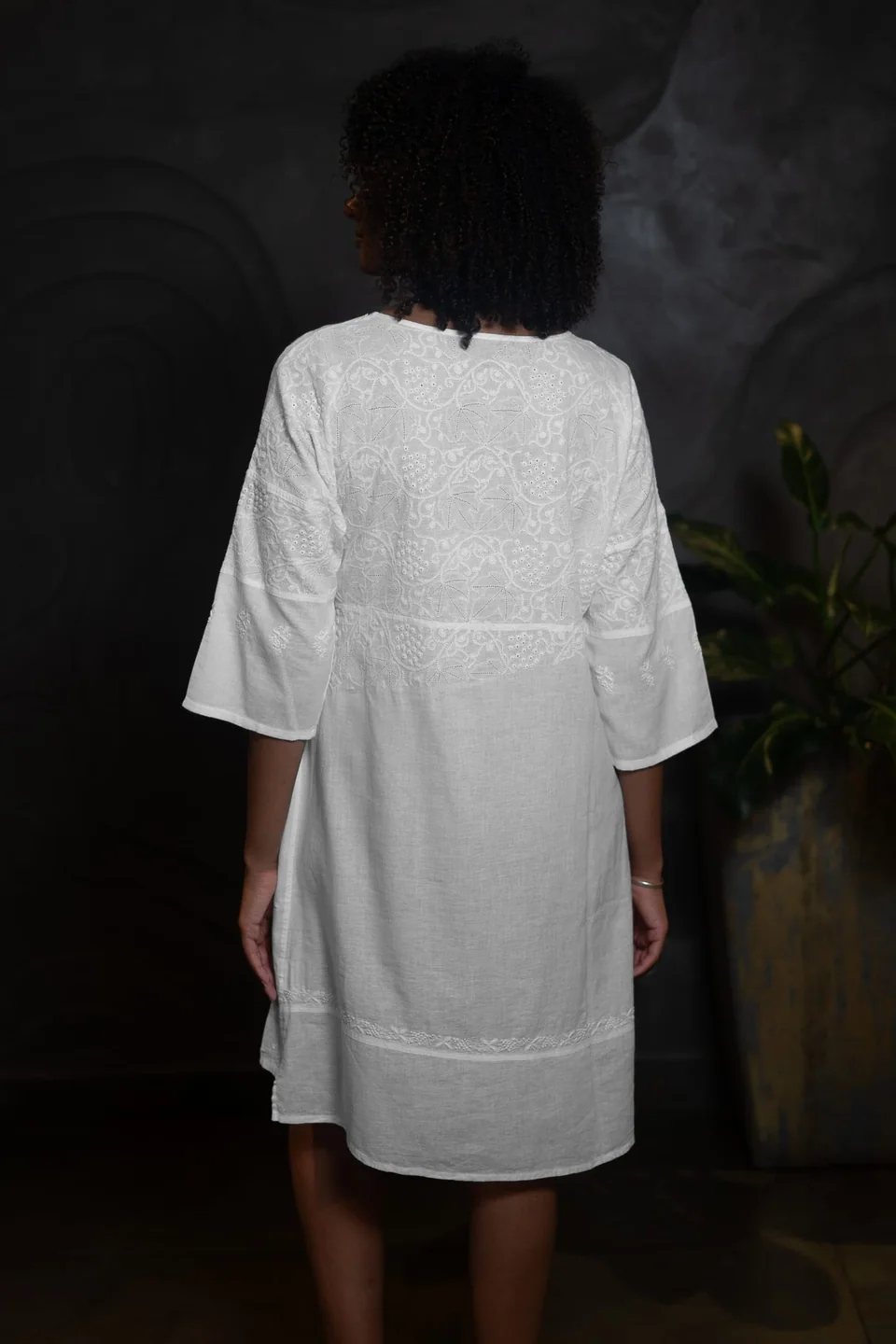
Our white tunic is another crowd-pleaser, once again featuring hand-embroidery in all its glory. Fashioned from cloud-light cotton, it has a gentleness that is truly unparalleled.
Why Chikankari belongs in your wardrobe
It's a kind of quiet luxury that never goes out of style.
At Sensclo, every garment is a bridge between the past and a more conscious future. We invite you to feel the difference: the softness of hand-stitched heritage against your skin, woven into every thread, and the joy of wearing something truly authentic.