West Bengal
Kantha
A running stitch that started as a way to save worn cloth.

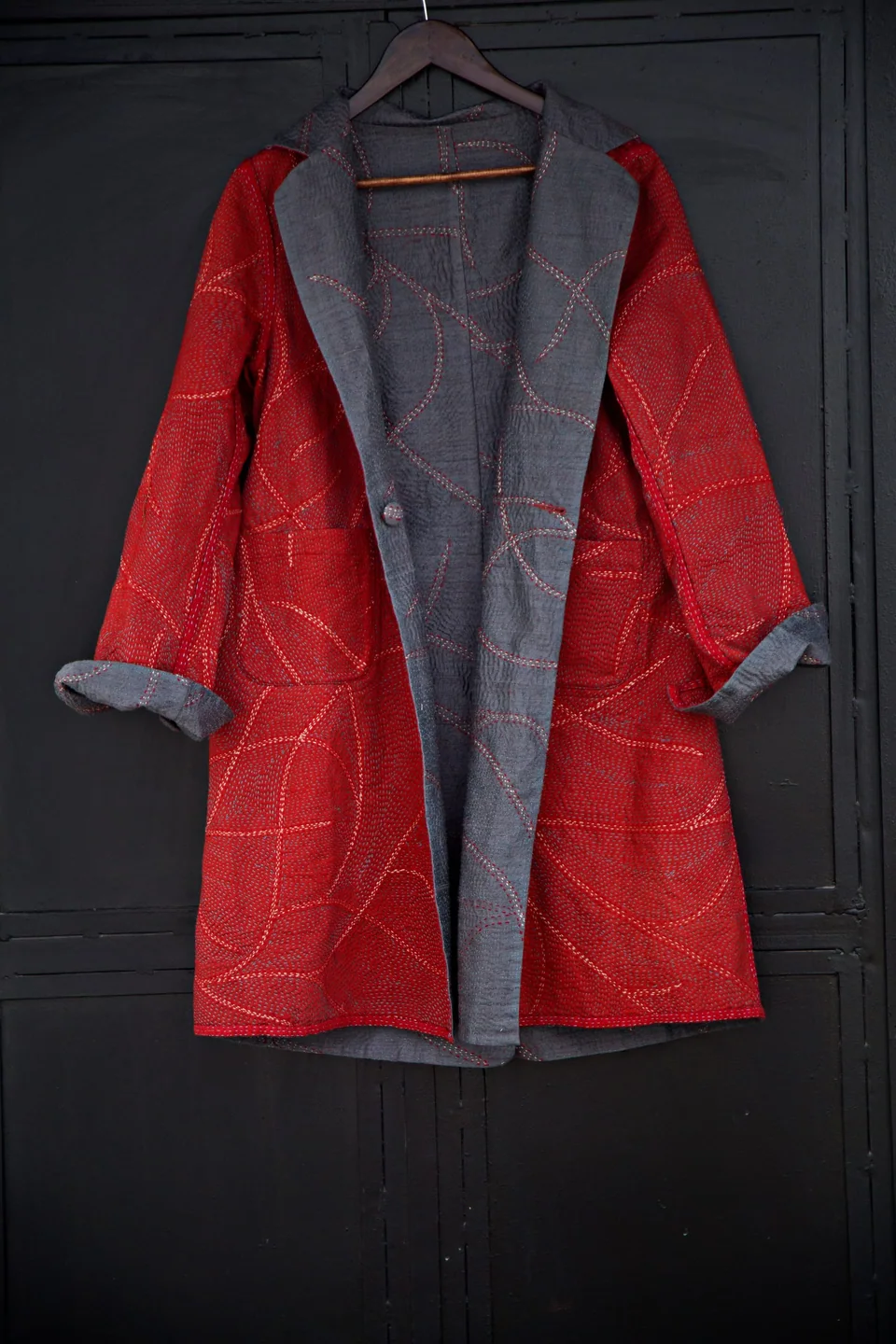
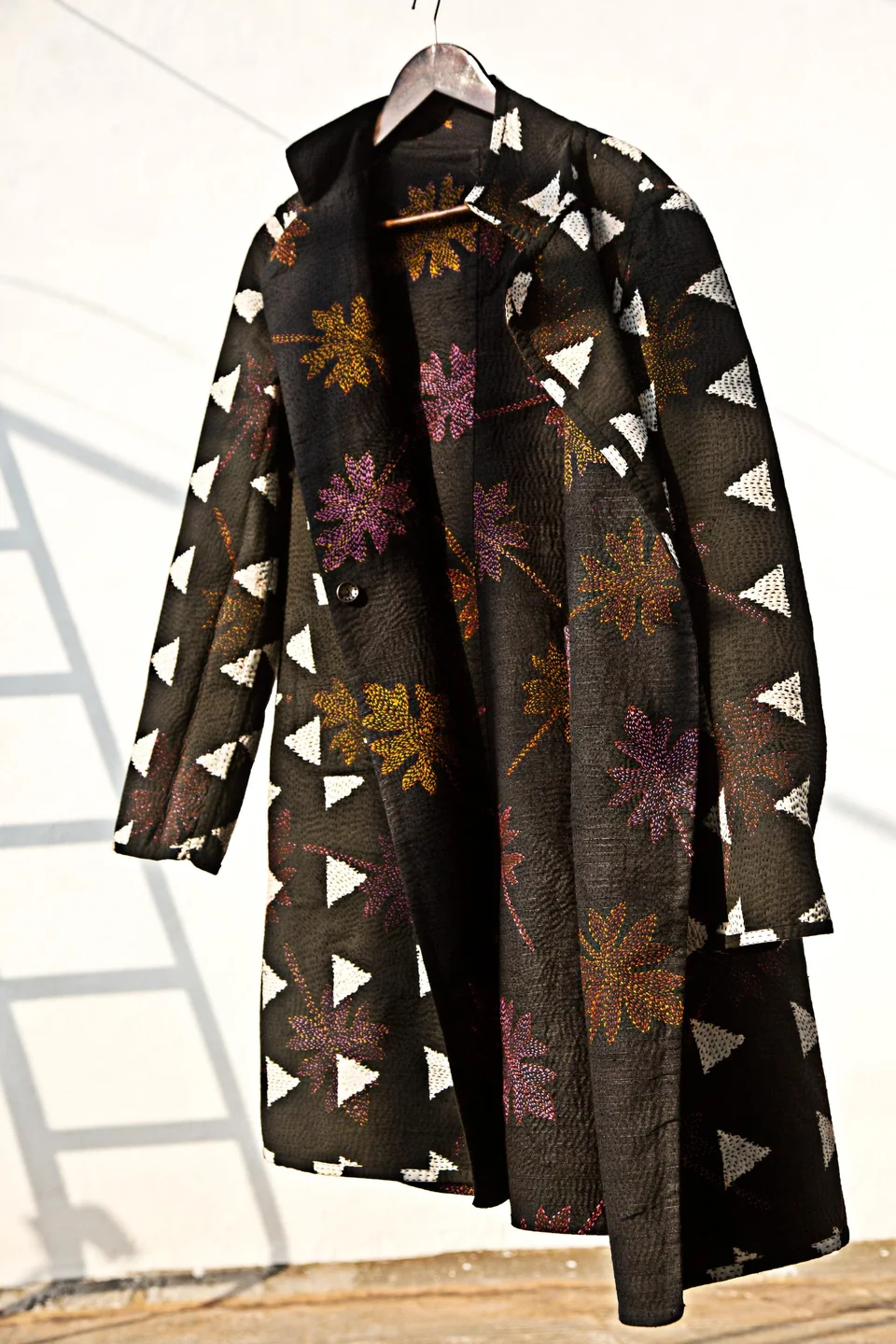
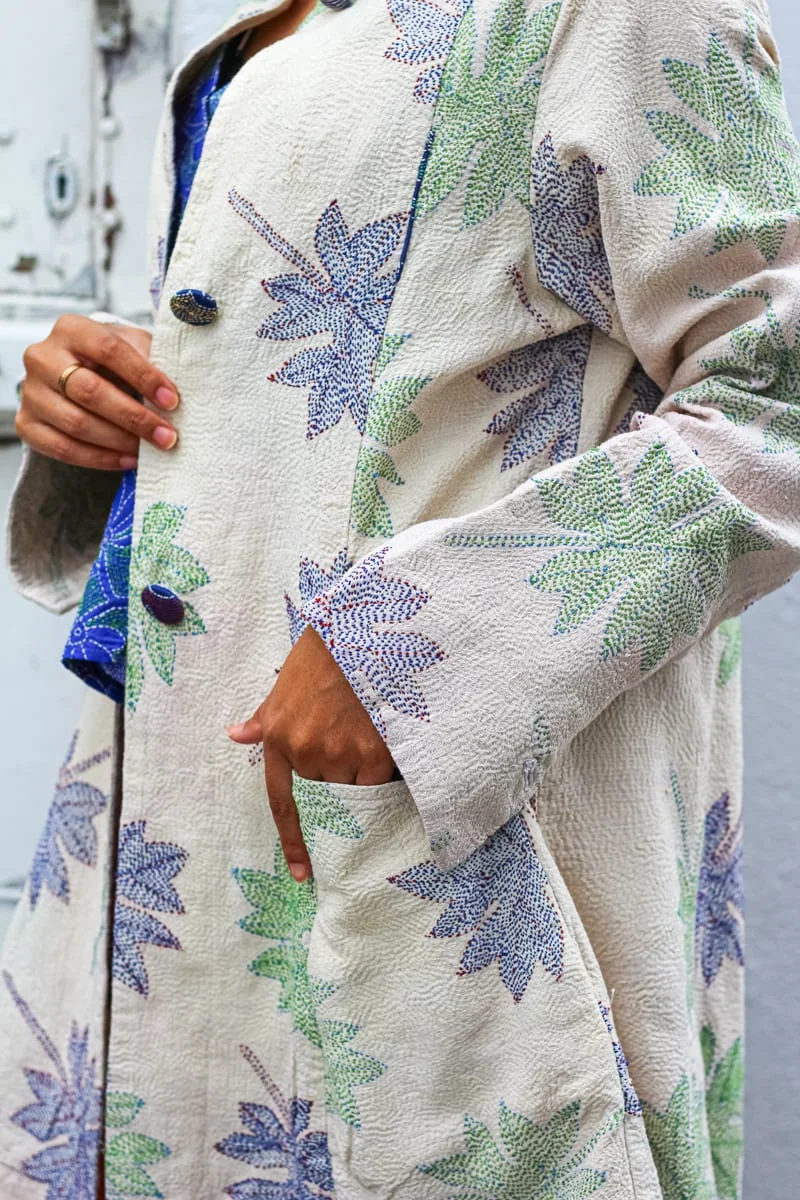
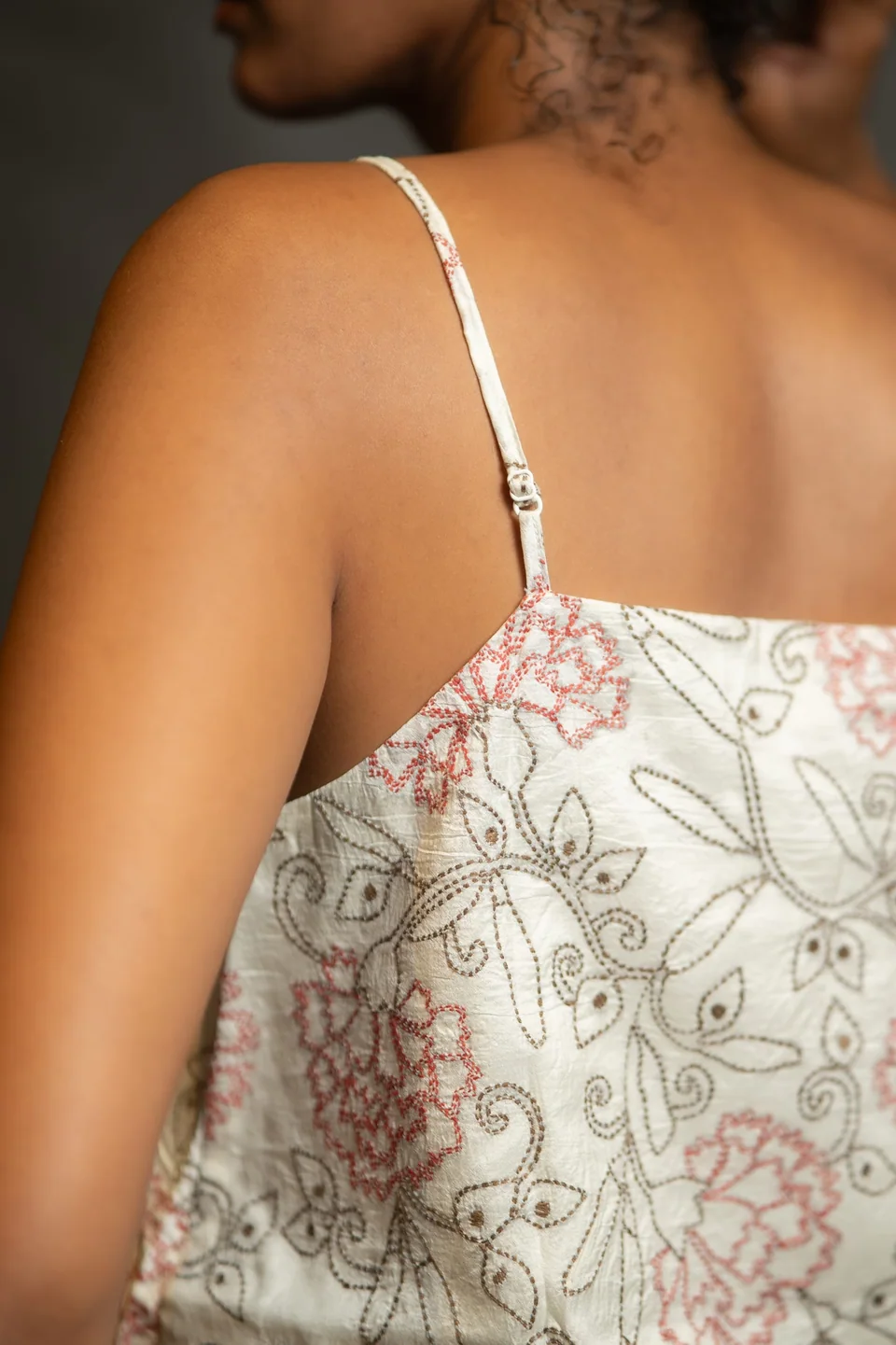
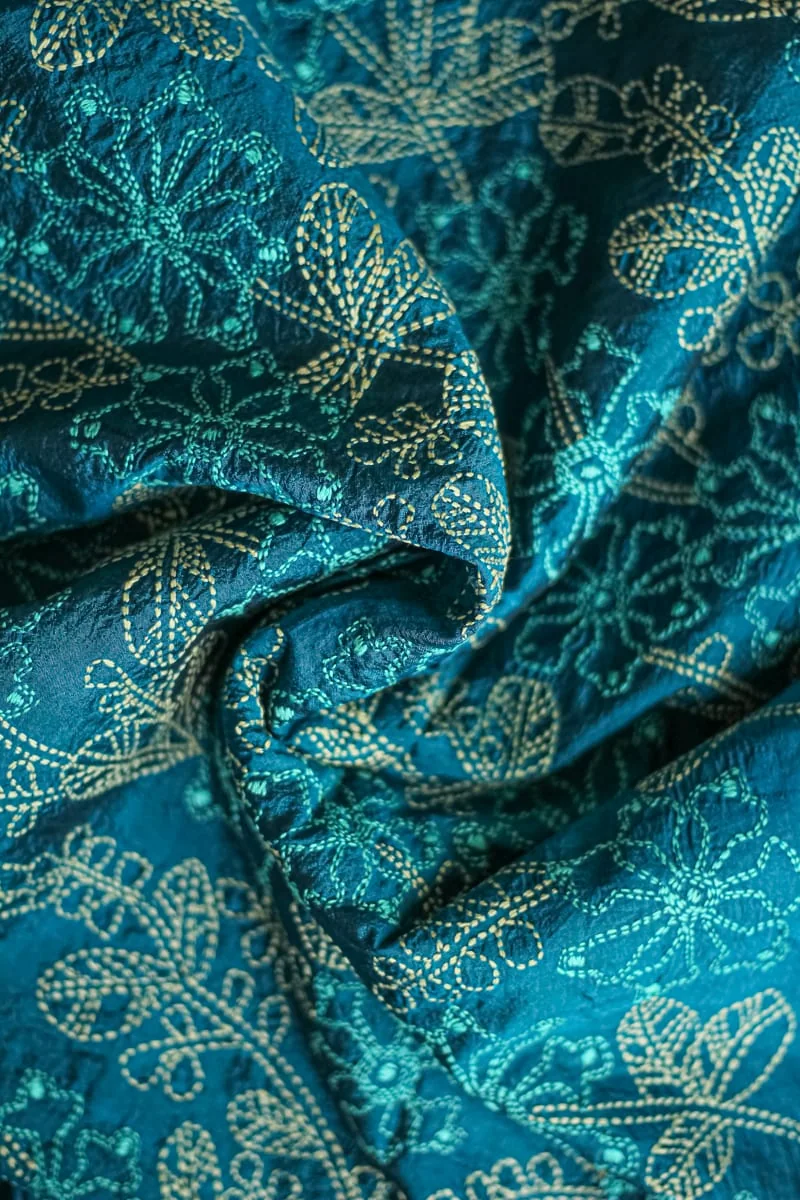
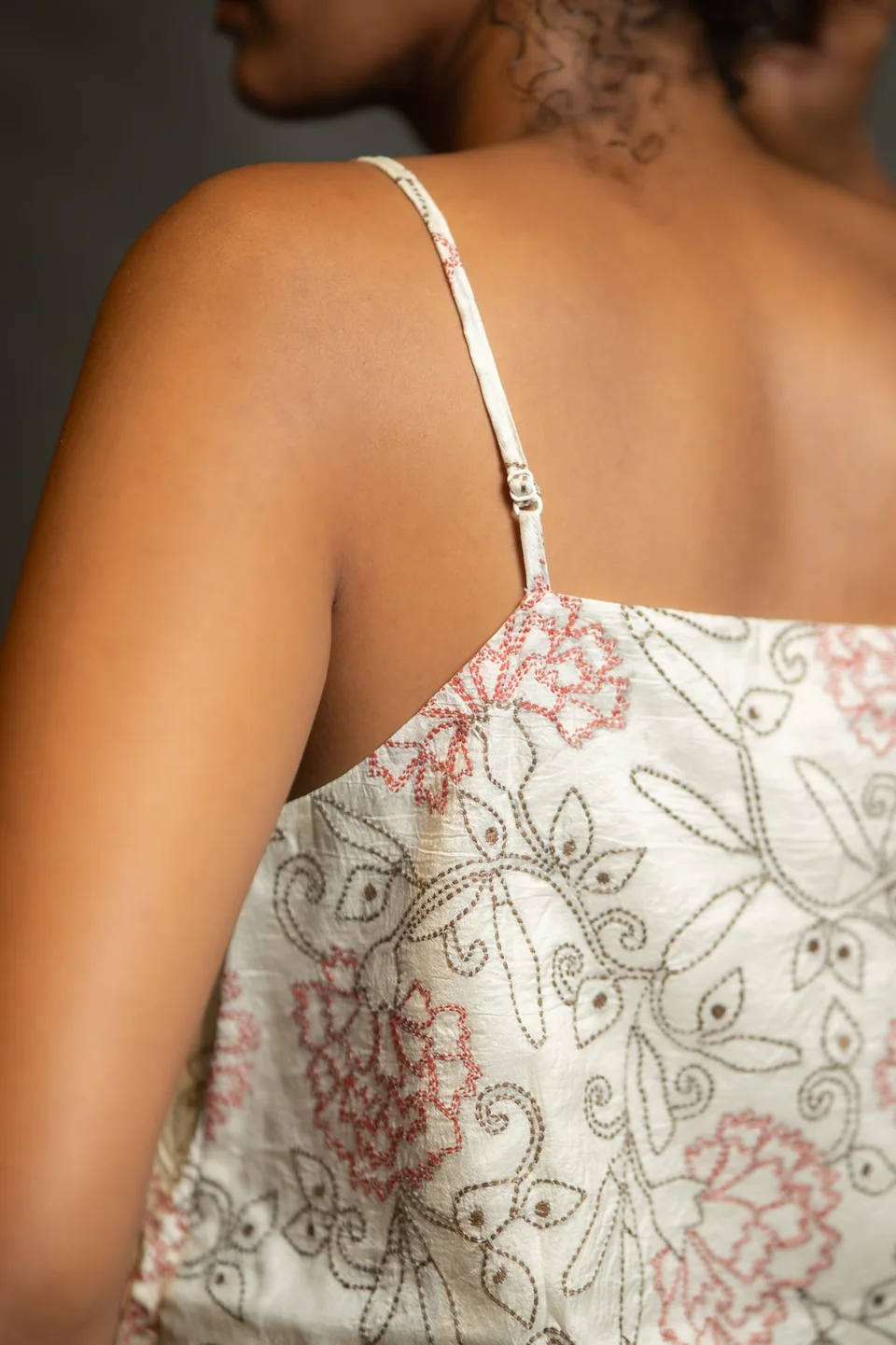
Kantha encompasses both the style of the running stitch and the finished cloth itself. This craft flourished in East and West Bengal, where resourceful women of all ages repurposed discarded clothing and adorned it with simple running stitches. The motifs include flowers, vines, mangoes, and the Tree of Life.
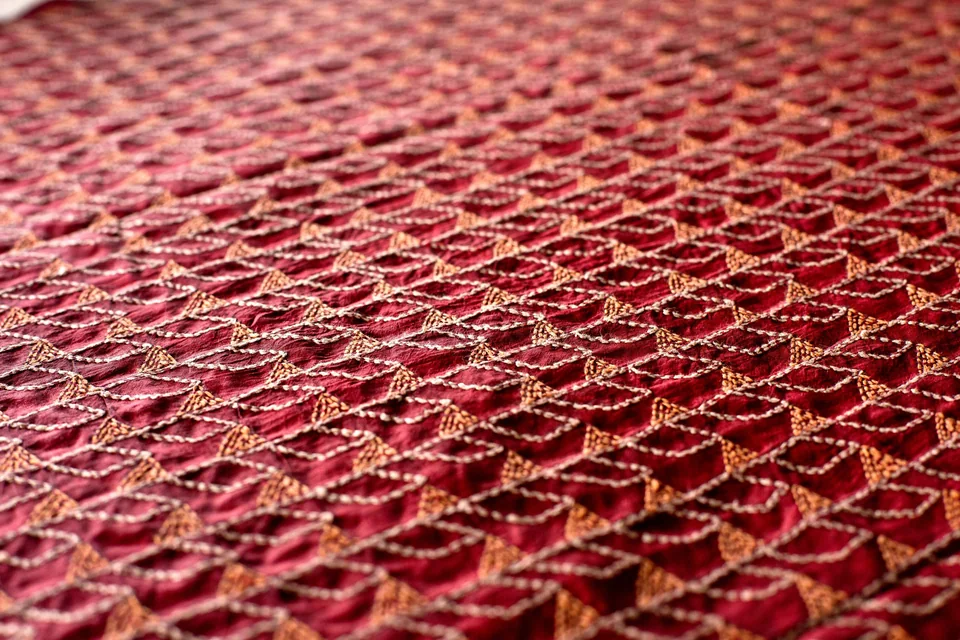
A completed Kantha piece typically displays a slightly wrinkled and wavy appearance, evidence of the hundreds of stitches that hold it together. Traditionally a household tradition in rural Bengal, the art form has in recent years found a wider audience. Some of our Kantha pieces take over 300 hours to complete.
The stitch
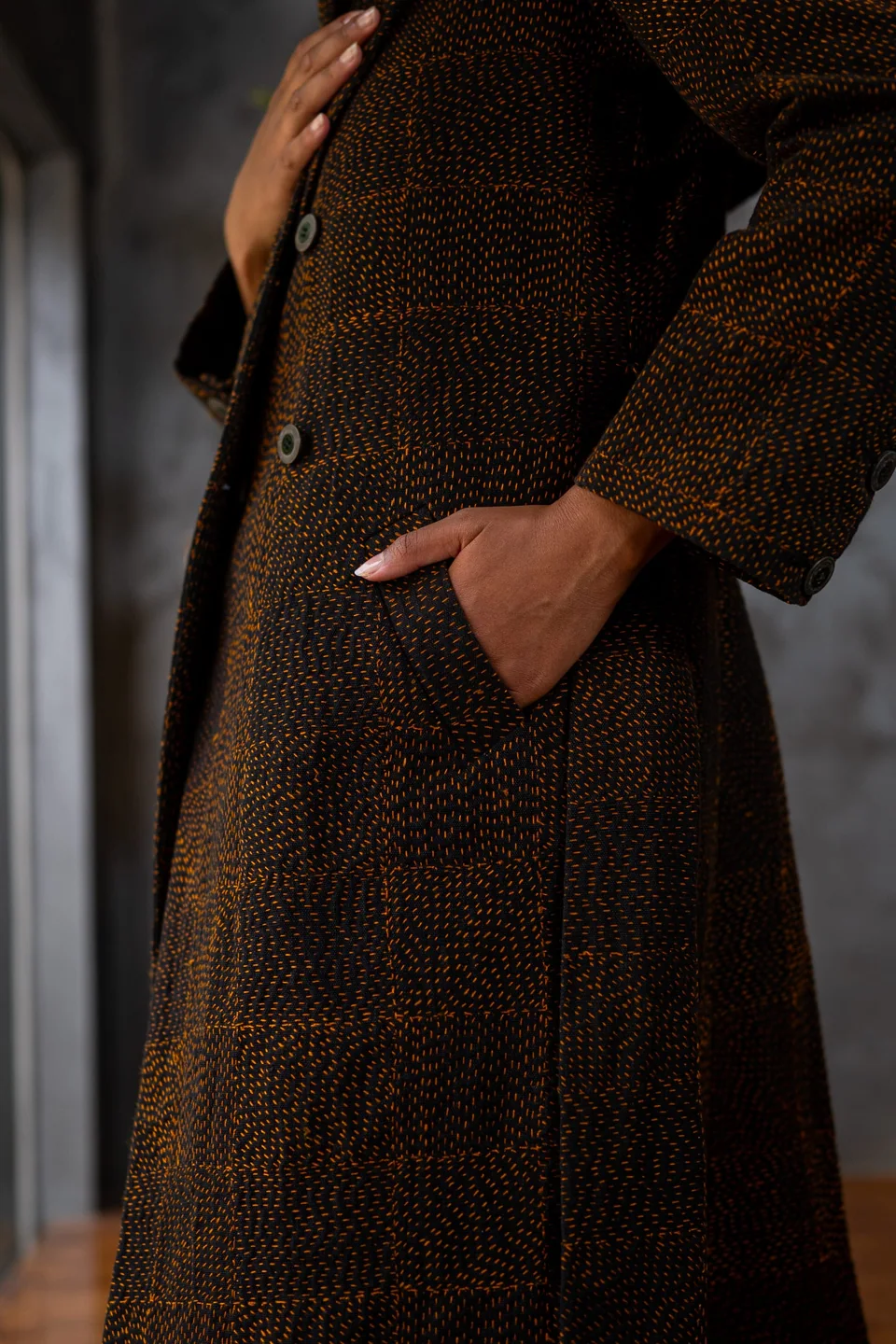
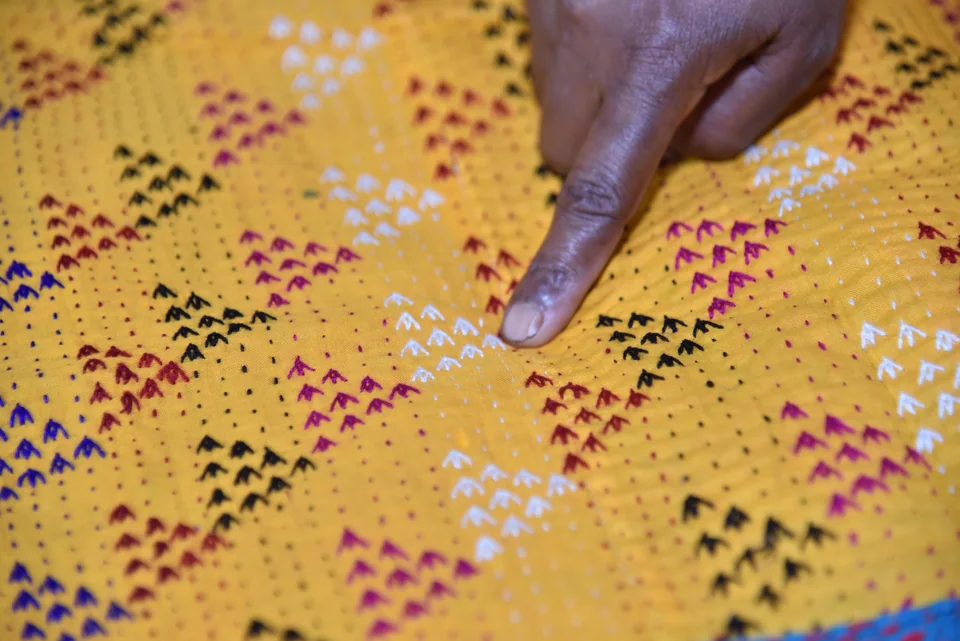
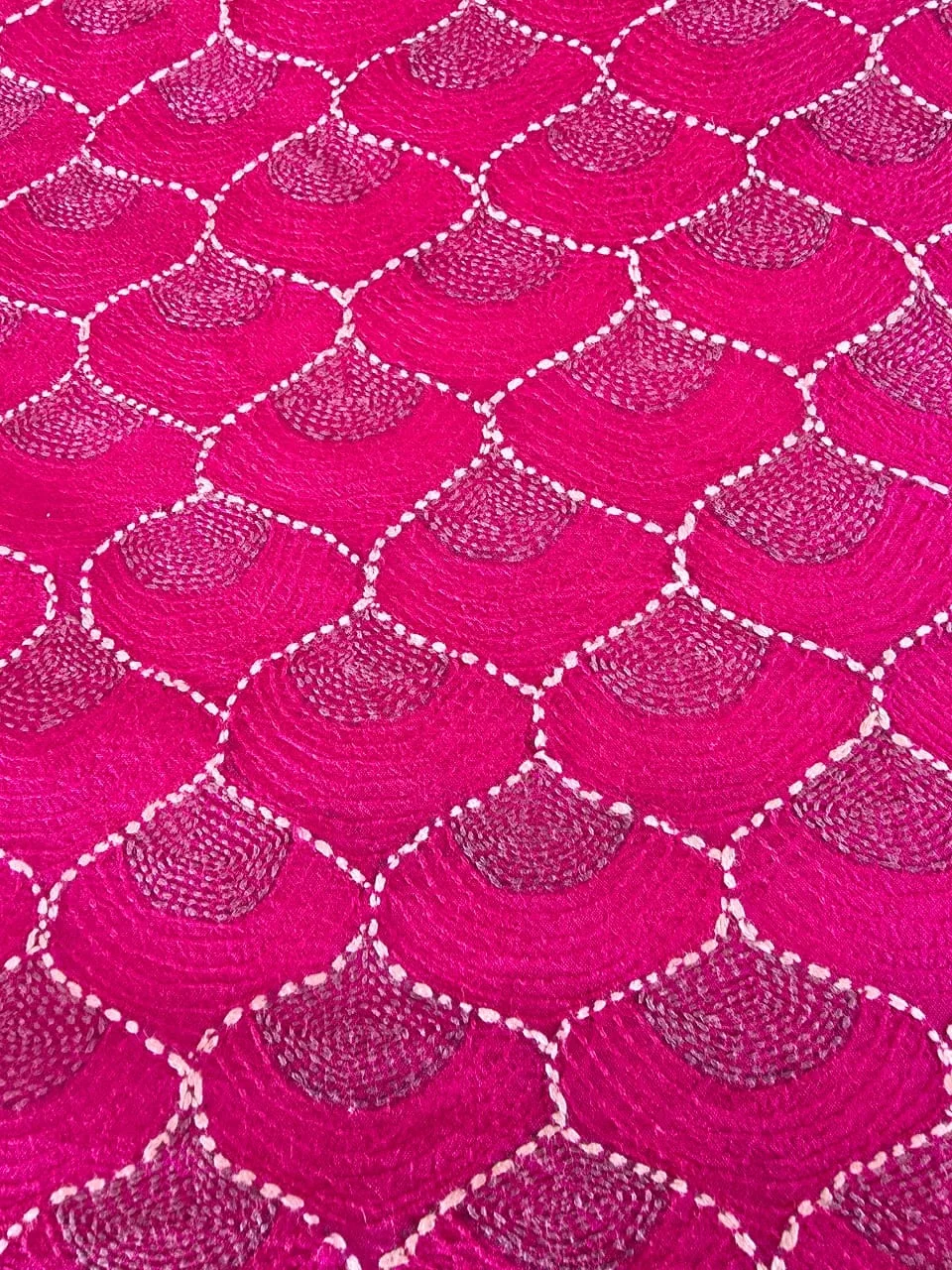
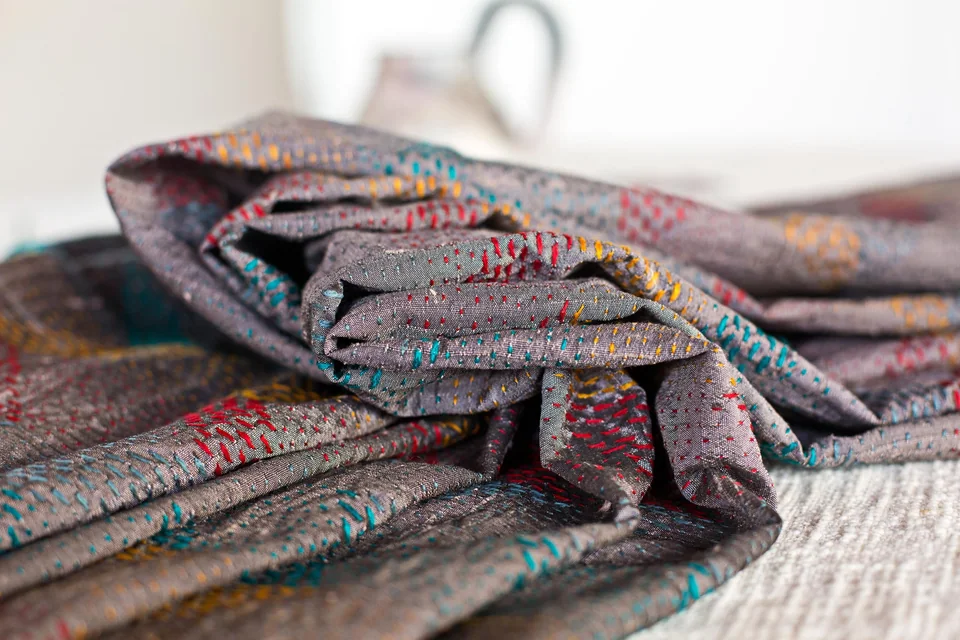
The stitch is the running stitch. Needle in, needle out, a dashed line across the cloth. It is the first stitch most people ever learn, and everything in kantha is built out of it.
Cotton washed a few hundred times goes thin and limp and soft, and that softness was the reason to keep it. Three or four worn cloths, laid one on top of another, held together with rows of running stitch. Out came a quilt, a wrap, something to put a baby down on. Then the decoration, worked in the same stitch. Women of all ages in a household worked on the same piece, so one kantha can hold several hands.
The surface
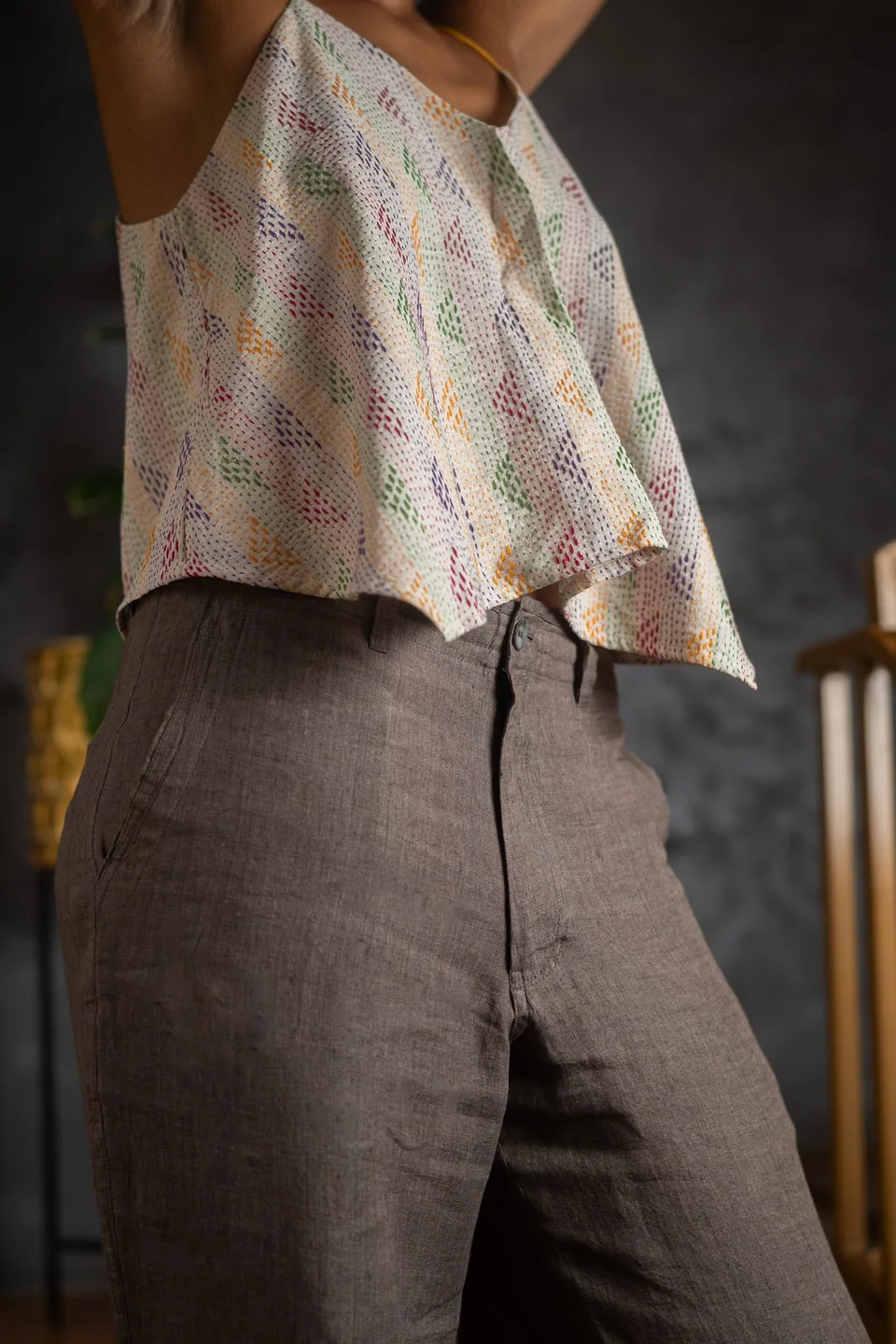
A finished kantha does not lie flat. All those lines of stitching pull at the layers and the cloth settles into a shallow ripple. You can see it from across a room and feel it under a hand. Even tension is the one thing a machine is good at, which is why machine quilting never looks like this.
The oldest kanthas were double-faced. The embroiderer worked so the design read the same on both sides, and both sides were the front. Our reversible kantha coats are made the same way: three layers, stitched right through, both faces finished. Wear them either way round.
In the making
Wearing it
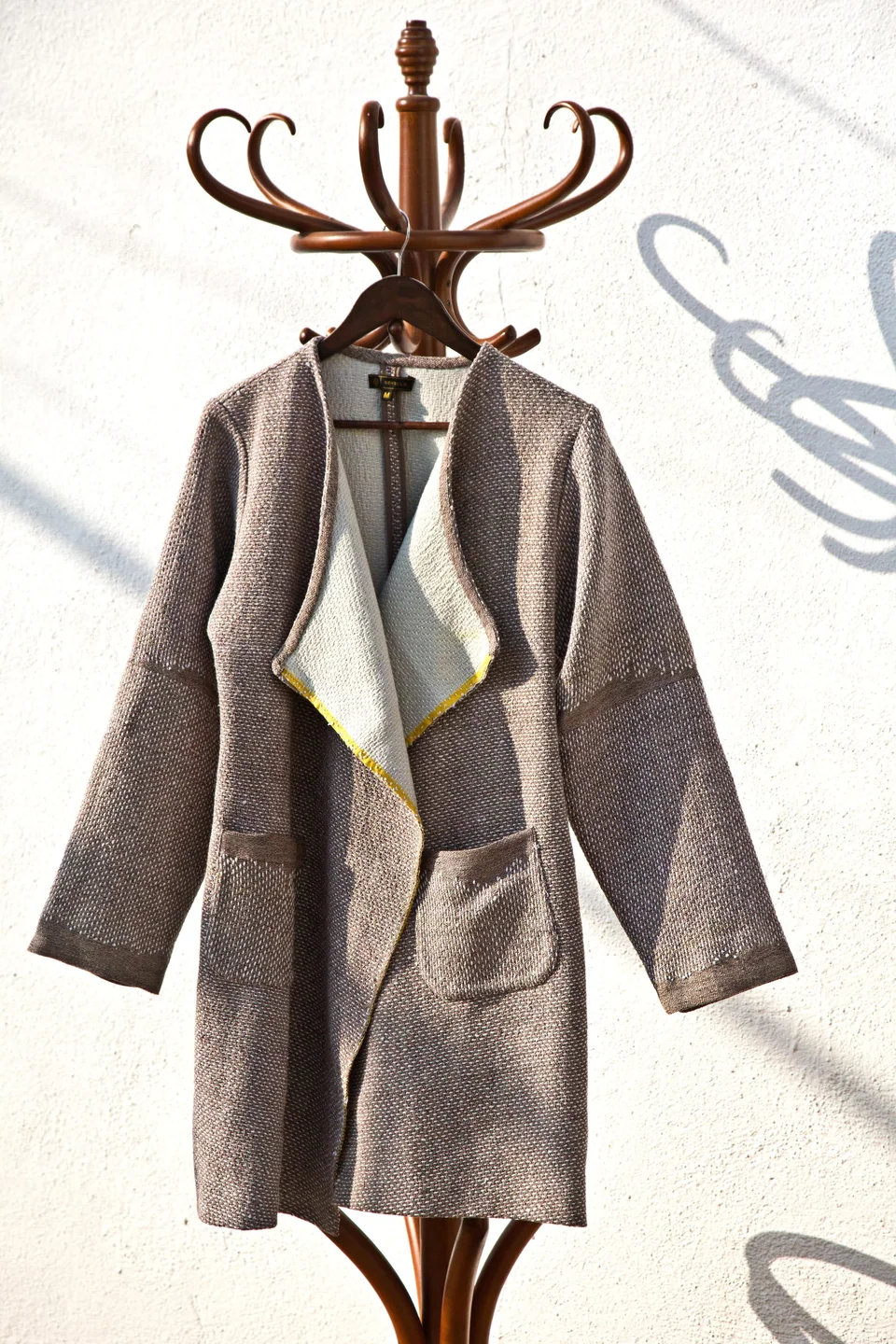
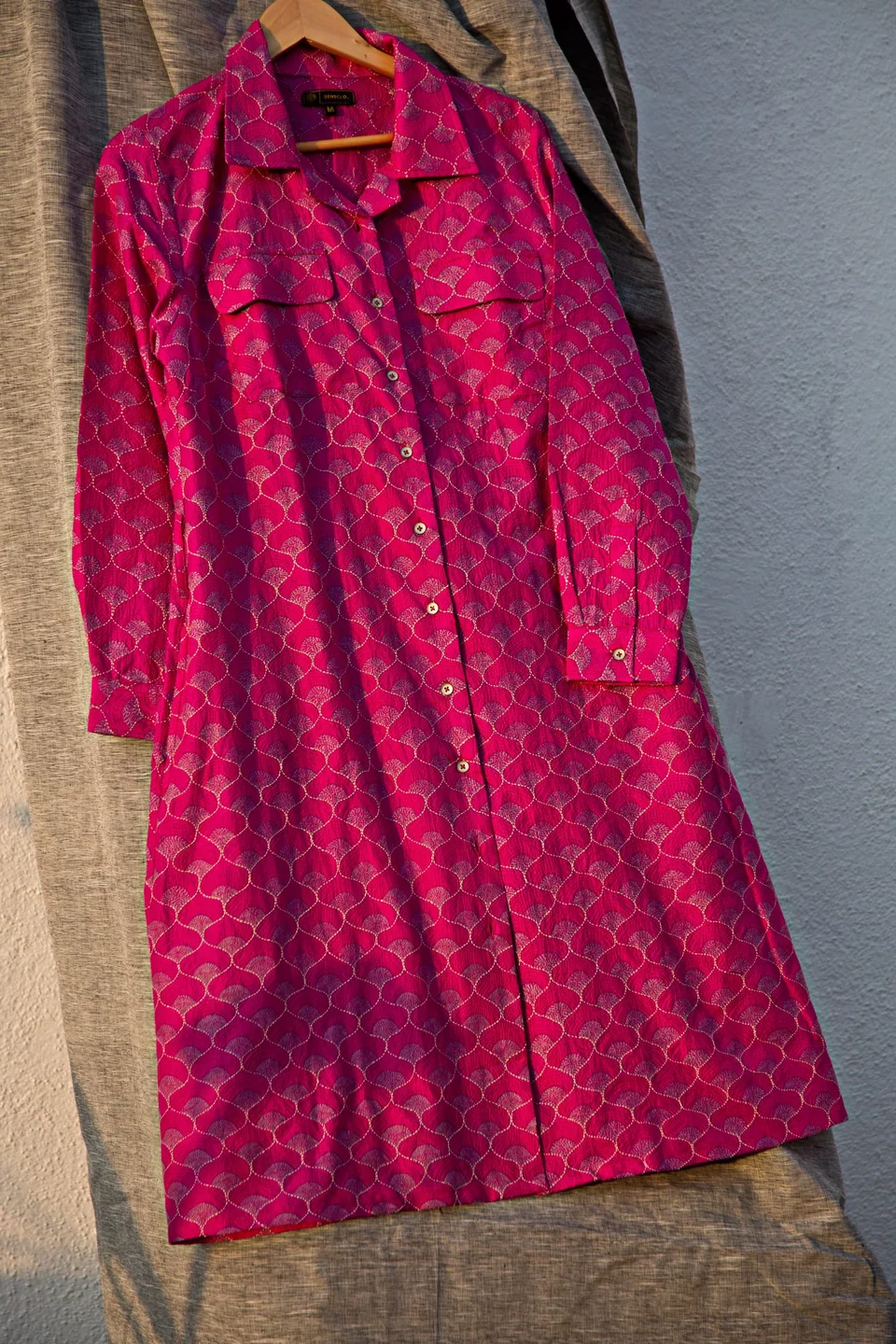
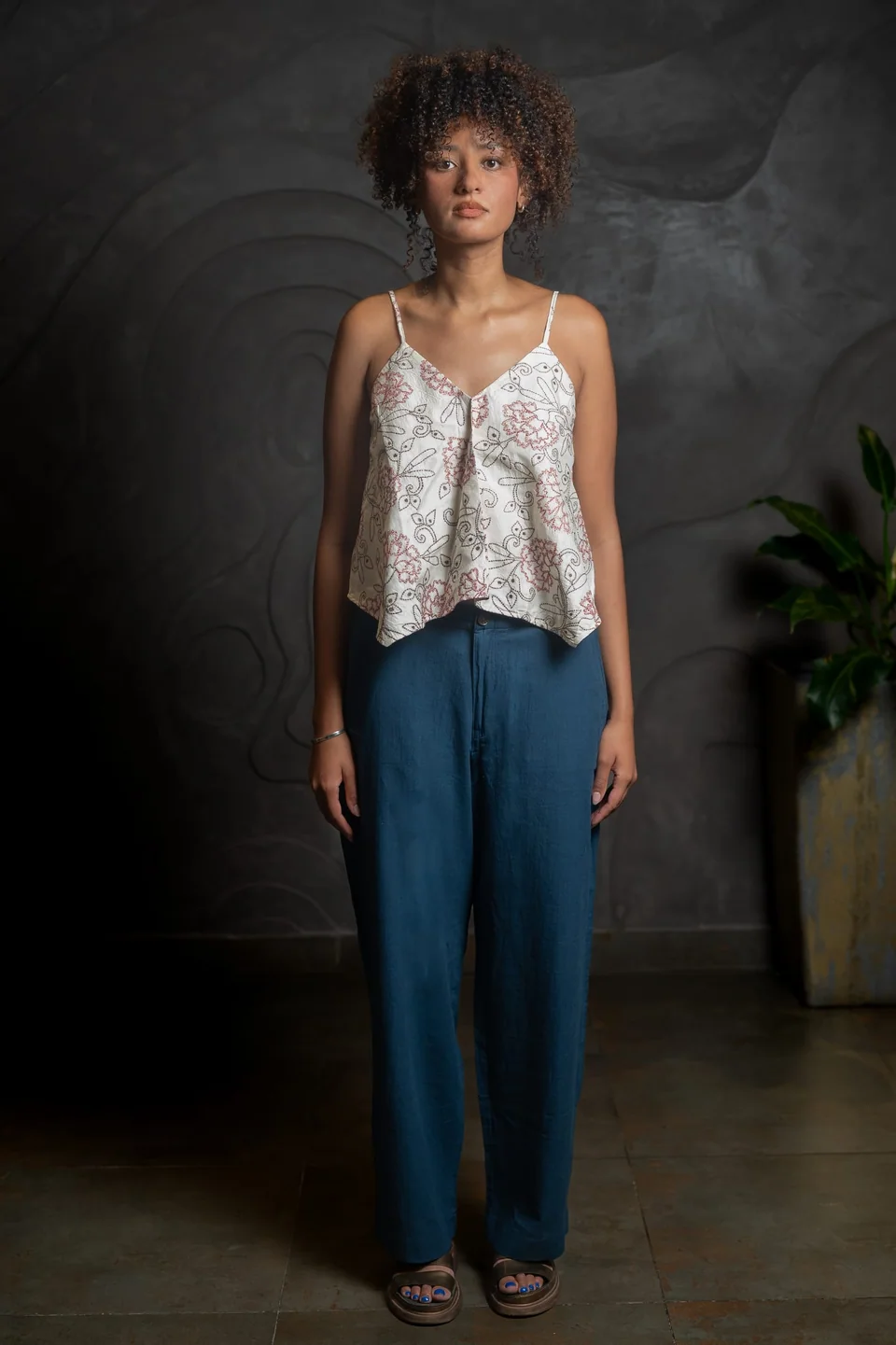
What we have made with Kantha.
In the studio now
From the archive