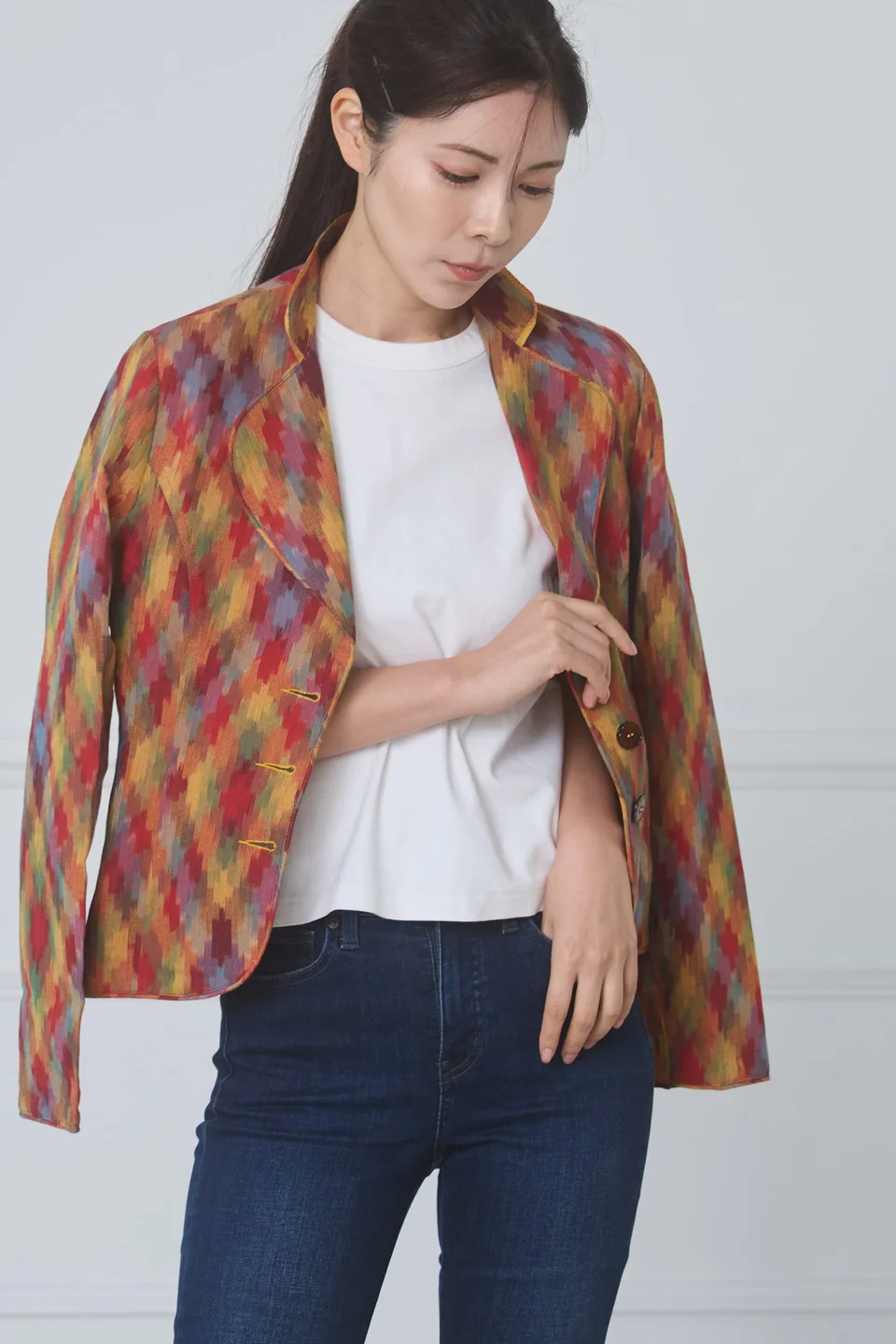
Telangana, Odisha and Gujarat
Ikat
The pattern is dyed into the yarn before a single thread is woven.

Ikat is a remarkable textile-patterning technique characterised by binding yarns to resist dye before weaving, resulting in fabrics that carry the tied-yarn dye-resist patterns within the cloth itself.
Before the weaving process begins, either the warp, the weft, or sometimes both, are meticulously tied off with fibre knots that prevent them from absorbing the dye. These sections are then dyed in specific colours. The process involves tying, dyeing, untying, re-tying, and dyeing again, in precise colours and positions, before a single thread goes onto the loom.
Double Ikat is the most prestigious and complex method, with both warp and weft threads tied and dyed, then painstakingly aligned on the loom. This is only practised in India, Bali and Japan. The beauty of Ikat lies in the impossibility of perfect execution: the hazy, slightly blurred edges of every motif are the signature of the craft.
Tying
The threads are stretched out on a frame and gathered into bunches. Each bunch is tied off tightly wherever it has to stay undyed. Where the tie sits, the dye cannot get in.
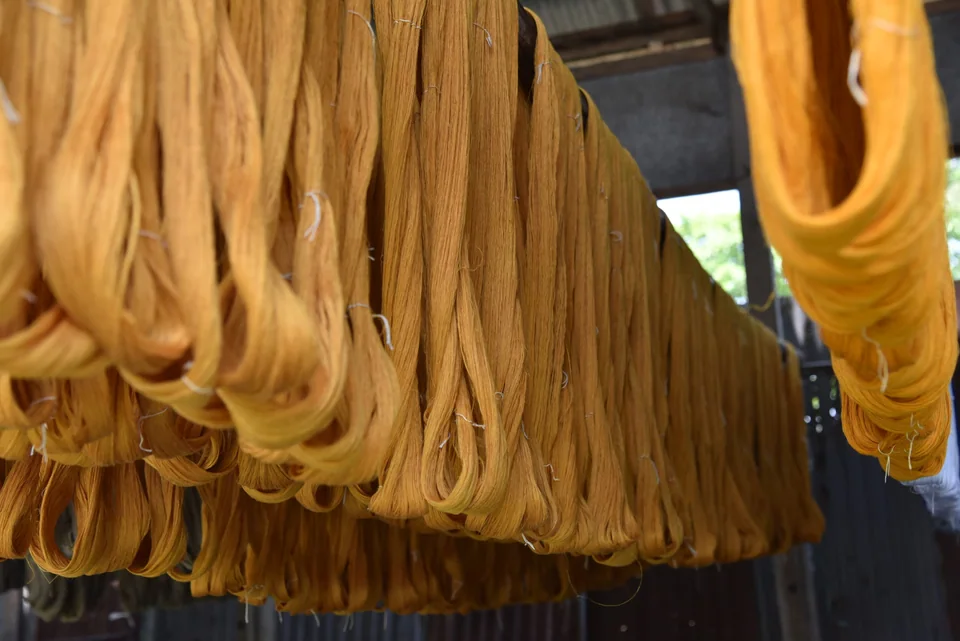
Somebody has to work out, before any colour is mixed, exactly which bunch is tied at exactly which point along its length, so that the picture appears when the threads are finally laid side by side. Then the dyeing. The yarn goes into the bath, comes out, and for the next colour some ties are cut off and new ones go on. Colour by colour, the design builds up in knots.
Three kinds
Warp ikat is the simplest. Only the lengthwise threads carry the pattern, and the weft crossing them is a single colour.
Weft ikat is harder. The dyed threads go across a plain warp, and they have to be woven in the exact order they were dyed. Get one out of sequence and the pattern will not assemble.
Double ikat is the prestige version and the expensive one. Warp and weft are both tied and dyed, then both have to be aligned on the loom so the two halves of the design meet where they were designed to meet. The threads shift by a hair as they are tied, again as they are dyed, again as they are woven. That haze is what people recognise ikat by.
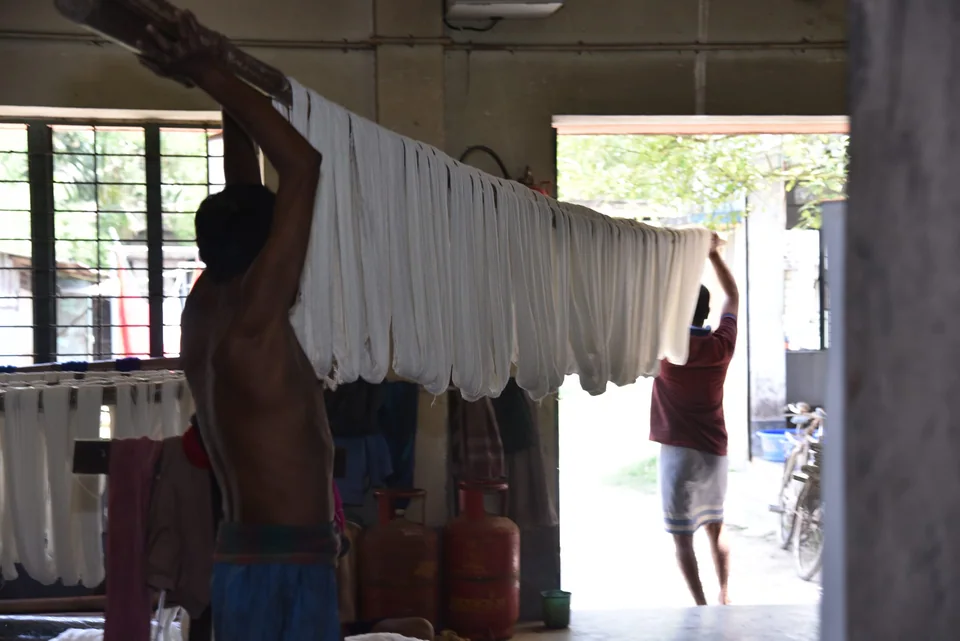
In the making
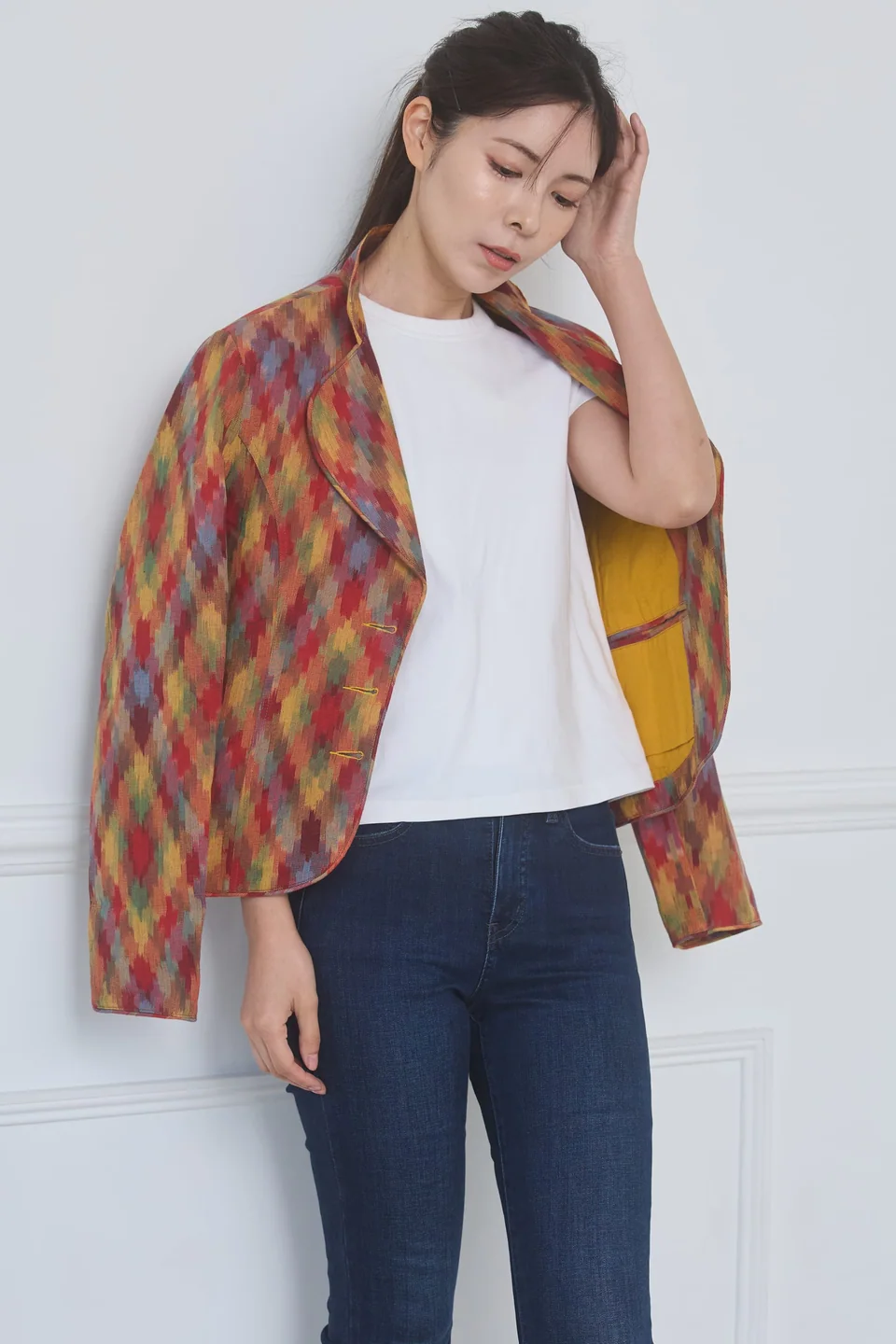
Wearing it
What we have made with Ikat.
In the studio now